

.png)
Space Forge Generates Plasma in Orbit for GaN& SiC
Published: 1.6.2026
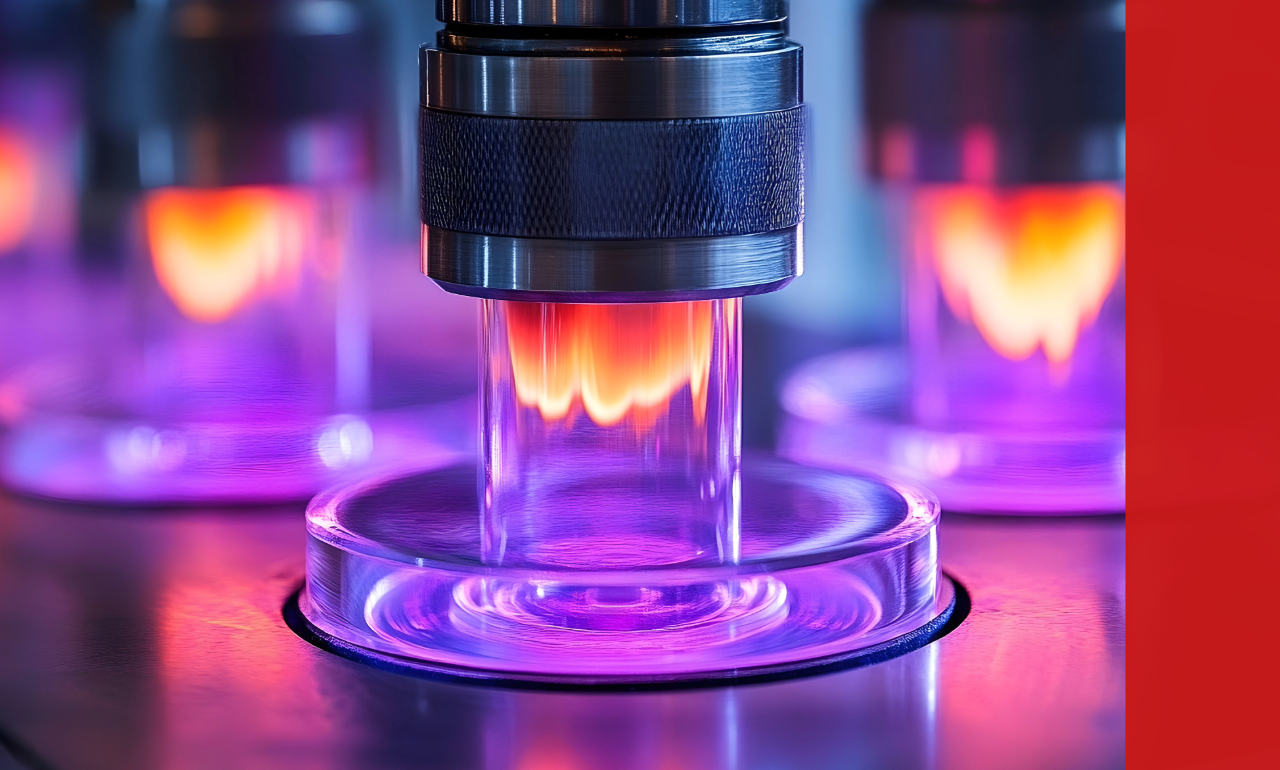
As semiconductor performance increasingly depends on materials quality—not scaling alone and device makers are under pressure to improve crystal purity, defect control, and thermal performance, especially for wide bandgap devices used in power conversion, RF, and high-reliability systems. Space Forge’s latest update targets that upstream constraint.
Space Forge said it successfully generated plasma aboard its ForgeStar-1 satellite in low Earth orbit, demonstrating that high-energy process conditions can be created and operated autonomously on a free-flying platform. The company describes the test as a foundational step toward in-orbit manufacturing of advanced semiconductor materials, where microgravity and ultra-clean vacuum conditions could support gas-phase crystal growth approaches that are difficult to replicate on Earth.
In its announcement, CEO and co-founder Joshua Western said the achievement “proves that the essential environment for advanced crystal growth can be achieved” on a commercial satellite.
While microgravity materials research has long been conducted aboard the International Space Station, Space Forge is presenting ForgeStar-1 as a different model: a standalone, fully autonomous commercial manufacturing platform. The company says the goal is to validate whether semiconductor process environments can be established, controlled, and repeated without human intervention.
Space Forge argues the orbital environment can support cleaner crystal growth due to microgravity, ultra-high quality vacuum, and stable thermal conditions. The company also cited a vacuum environment with near-zero nitrogen contamination as part of its rationale for pursuing in-space manufacturing.
Separately, recent reporting said Space Forge activated ForgeStar-1’s manufacturing furnace in orbit and reached roughly 1,000°C (1,830°F) consistent with the high-temperature processing needed for some advanced materials workflows.
Launch and regulatory background
ForgeStar-1 launched aboard SpaceX’s Transporter-14 rideshare mission from Vandenberg Space Force Base and is operated from Space Forge’s mission control center in Cardiff. The mission was authorized under an in-space manufacturing license issued by the UK Civil Aviation Authority, one of the first such licenses granted for orbital manufacturing activities.
The satellite is expected to complete its test campaign before undergoing a controlled end-of-life through natural orbital decay.
ForgeStar-1 will run additional tests, including parameter sweeps intended to map plasma behavior in microgravity and collect data to inform future missions. The company also said the mission is designed to end with a controlled demise as the spacecraft undergoes natural orbital decay, with monitoring support referenced in its announcement.
This milestone should be viewed as early-stage process validation, not a signal of near-term supply impact. Commercial production, qualification pathways, and cost competitiveness remain longer-horizon challenges. However, the demonstration reflects continued interest in alternative manufacturing routes for wide bandgap and ultra-wide bandgap materials where qualification lead times, performance targets, and supply assurance can shape long-term sourcing strategies.
IBS Electronics will continue tracking developments in wide bandgap materials and emerging manufacturing approaches. For more market updates, go here.


