

.png)
U.S. Imposes 25% Tariff on Select AI Chips With Key Exemptions
Published: 1.19.2026
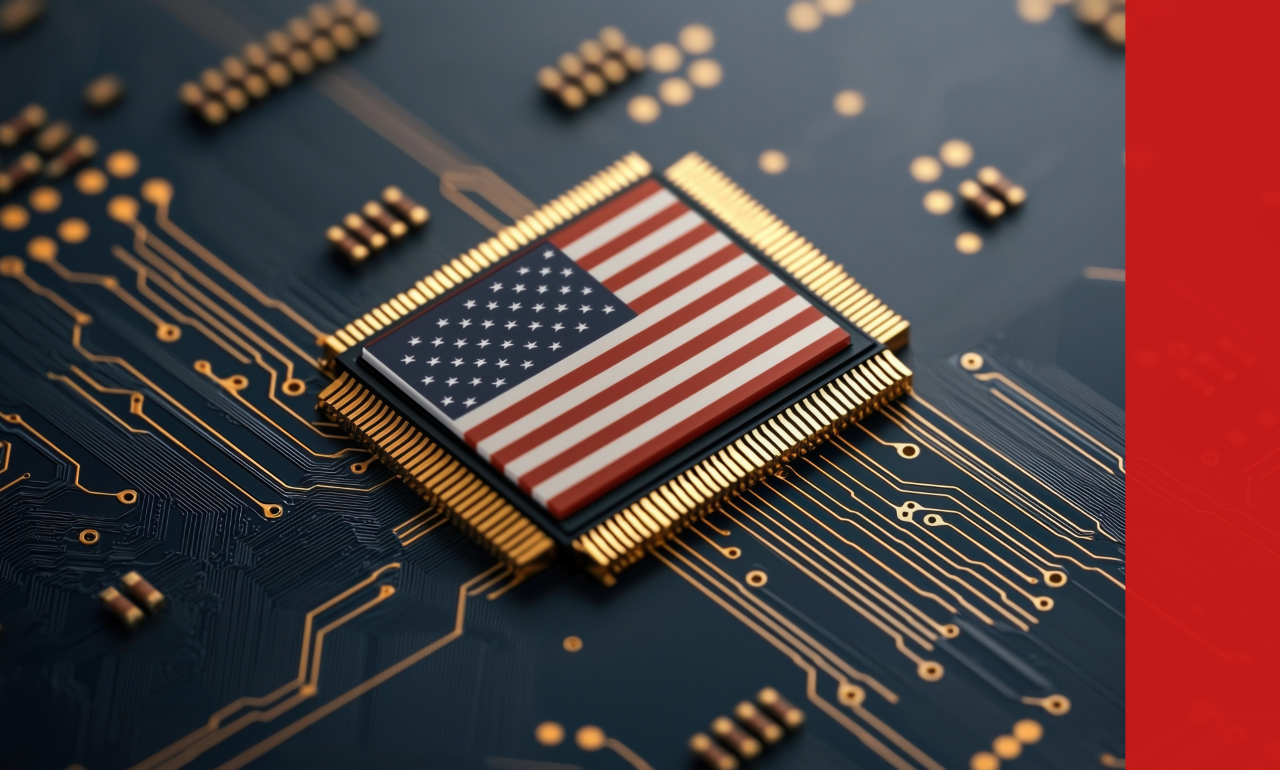
- The U.S. imposed a 25% Section 232 tariff on a narrow class of advanced AI chips, while carving out broad exemptions for U.S. data centers, R&D, startups, industrial, and public-sector use.
- Tariff exposure depends less on the chip itself and more on how and where it is deployed, making documentation, HTS classification, and Chapter 99 reporting critical.
- The proclamation signals a Phase 2 risk potentially broader semiconductor tariffs tied to U.S. manufacturing and supply-chain investment later in 2026.
The U.S. has issued a national-security tariff action targeting a narrow set of “advanced computing” chips, while explicitly protecting domestic AI buildout and non-data-center demand from disruption.
On January 14, 2026, the White House published a Presidential Proclamation invoking Section 232 of the Trade Expansion Act of 1962 covering semiconductors, semiconductor manufacturing equipment, and derivative products. The proclamation includes an immediate 25% ad valorem duty on certain “Covered Products,” described as a very limited category of advanced chips tied to the administration’s AI and technology policy priorities.
What’s included?
The White House fact sheet names NVIDIA’s H200 and AMD’s MI325X as examples of the chips in scope.
However, the policy is not written as “two SKUs.” In implementation guidance, U.S. Customs and Border Protection (CBP) describes the covered category using Harmonized Tariff Schedule (HTSUS) headings plus technical performance parameters (TPP and DRAM bandwidth) for logic integrated circuits (or products containing them).
The new tariff is not meant to hit U.S. AI buildout
While some media portray this as a broad punitive tariff, the policy is explicitly structured to protect domestic AI development and critical uses.
The proclamation and accompanying guidance make clear the 25% tariff does not apply to covered products imported for U.S. end uses that support domestic AI and technology infrastructure, including:
- Use in U.S. data centers
- Repairs or replacements performed in the U.S.
- Research and development in the U.S.
- Use by startups in the U.S
- Non-data-center consumer applications in the U.S.
- Non-data-center civil industrial applications in the U.S.
- U.S. public sector applications
- And other uses the Secretary of Commerce determines contribute to strengthening the U.S. technology supply chain or domestic manufacturing capacity
This approach effectively creates a two-tier system:
▫️ A tariff-free “domestic AI zone” for internal use cases that bolster U.S. competitiveness.
▫️ A 25% surcharge on imports that don’t clearly contribute to those domestic targets, including many transshipments and reexports.
CBP guidance states the new duties apply to covered entries on or after 12:01 a.m. Eastern time on January 15, 2026.
What CBP is telling importers to do
CBP’s bulletin breaks the program into new Chapter 99 headings that map directly to the tariff and the exemptions, detailing how firms should classify entries under new Chapter 99 HTSUS headings, including:
9903.79.01: Covered advanced semiconductor articles subject to the 25% duty
9903.79.03–9903.79.09: End-use exemptions mapping to the listed U.S. applications, with 0% additional duty
CBP also underscores that no drawback (refund of duties) is permitted once duties are paid, and Foreign Trade Zone entries must be recorded under “privileged foreign” status if subject to duty.
International Reaction & Geopolitical Context
The tariff has drawn global attention and initial responses:
- South Korea’s trade minister noted that the first phase is likely to have limited immediate impact on Korean semiconductor exports because it targets specific AI processors (e.g., NVIDIA, AMD) and excludes memory chips, South Korea’s primary export category. However, officials remain cautious about future phases that could broaden coverage.
- Some analysts interpret the tariff as part of a broader strategy to shift semiconductor production to the United States, with U.S. policymakers signaling the possibility of higher duties (up to 100%) on companies that don’t increase U.S. manufacturing investment.
- The policy also dovetails with ongoing U.S.–China technology competition, as previous proposals include leveraging duty mechanisms to capture economic value from AI chip sales into China
Why this matters for procurement teams (even if you expect to be exempt)
Even with broad carve-outs, the near-term impact is likely to show up in process and paperwork, not just price.
1) End-use documentation becomes a gating factor
Because the tariff’s applicability hinges on how the imported chip will be used, buyers should expect more attention to:
- end-user and end-use statements,
- shipment routing,
- correct customs classification and Chapter 99 reporting.
2) Contract language may need tightening
If exemptions depend on end-use, teams may want to review:
- who bears the cost if a shipment is reclassified,
- what documentation suppliers must provide,
- what happens if goods are held for review.
3) The “Phase 2” risk is real
The proclamation outlines a two-phase approach: immediate targeted duties now, and the possibility of broader semiconductor tariffs later, potentially paired with a tariff offset program intended to favor companies investing in U.S. production/supply-chain capacity.
What to watch next
The proclamation directs Commerce and USTR to provide a progress update on negotiations within 90 days, and it also calls for a market update on semiconductors used in U.S. data centers by July 1, 2026 whether the tariff is modified.
Whether this becomes a pricing issue for your organization may depend less on “which chip” and more on where it’s going and how it’s documented. IBS Electronics will continue tracking CBP guidance updates and any expansion beyond this initial narrow category. If you’d like, share a short list of your most tariff-sensitive line items and we can help structure a BOM risk review and sourcing options.


