

.png)
8-Inch Wafer Tightening: Industrial PMIC, Driver & Discrete Risk (2026)
Published: 2.20.2026
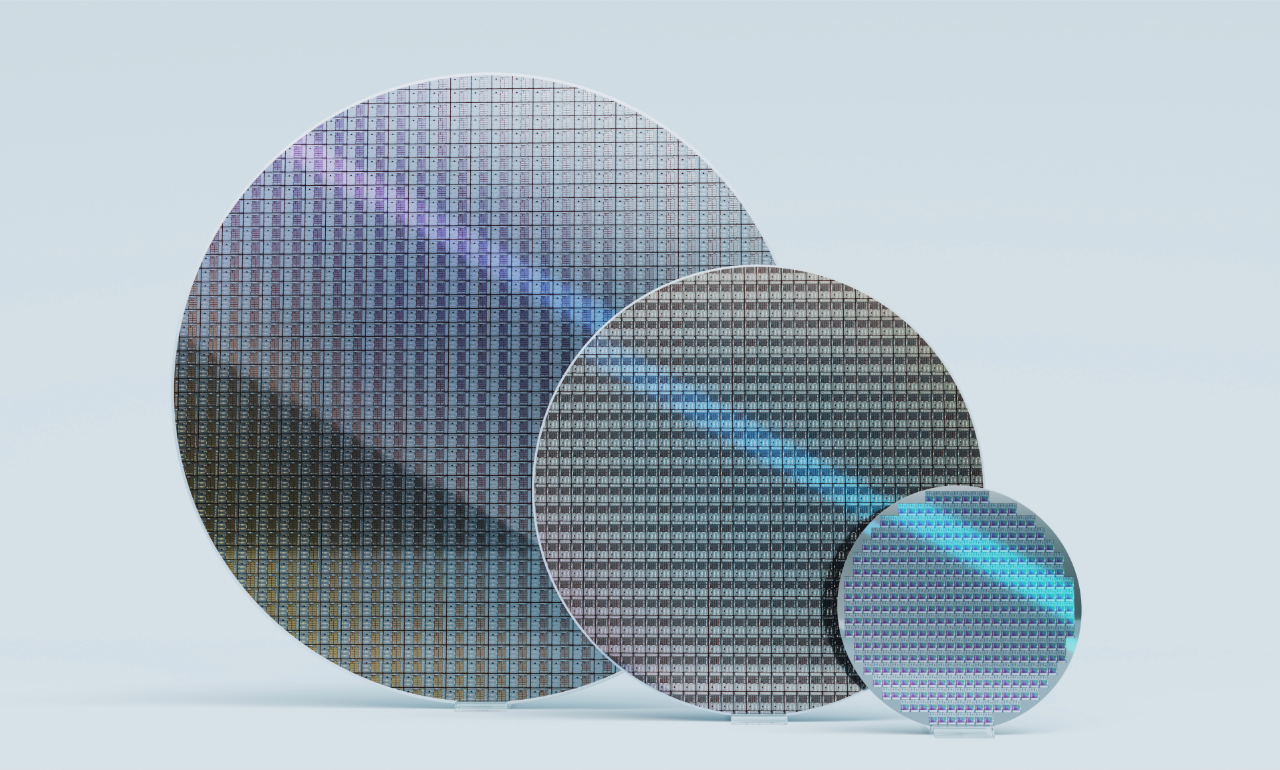
The 8-inch (200mm) wafer production pricing power and allocation leverage are shifting back toward foundries. In its latest foundry survey, TrendForce says TSMC and Samsung are scaling back 8-inch output, setting up a projected global 8-inch capacity decline of 0.3% YoY in 2025 and 2.4% YoY in 2026.
At the same time, TrendForce projects global average 8-inch utilization rising to 85–90% in 2026 from 75–80% in 2025 that is preparing suppliers for broader price actions.
Many industrial semiconductors like PMICs, drivers, and power discretes, are closely tied to 8-inch capacity. TrendForce notes that 8-inch fabs mainly produce power management ICs, display driver ICs, and discrete devices such as MOSFETs, IGBTs, and GaN components, the exact classes that stabilize industrial systems.
And even though SEMI forecasts record 200mm capacity for over 7.7 million wafers/month by 2026) growth driven heavily by automotive and power that doesn’t guarantee “easy availability” for specific specialty platforms (like BCD) or for long-life SKUs that can’t be swapped quickly.
What’s actually changing in the 8-inch market
1) Capacity is contracting at the top, even as demand shifts
TrendForce says TSMC began phasing down 8-inch capacity in 2025 and plans to fully shut down some fabs by 2027; it also reports Samsung started 8-inch reductions in 2025, and cites reporting that Samsung’s Giheung S7 8-inch fab could be shuttered in 2H 2026.
2) Price increases are being discussed and some have already shown up in power-related platforms
TrendForce reports that, with tightening expected in 2026, some foundries have notified customers of planned price increases ranging from 5% to 20%.
It also notes that growth in AI server power-IC orders plus China’s localization push lifted demand for BCD and PMIC processes and contributed to “catch-up” price increases at some China fabs that took effect in 2H 2025.
BCD and High-voltage Platforms: Where Pressure Shows Up First
BCD is a core 8-inch platform for power management and driver ICs. In late 2025, TrendForce News cited reports that SMIC and TSMC affiliate VIS issued price-increase notices concentrated on 8-inch BCD, averaging around 10%.
BCD tightness tends to show up as quote volatility, longer commit windows, and allocation-style buying:
- DC/DC controllers and LDO regulators
- Integrated PMICs
- Gate / motor drivers, LED drivers
- Power discretes that gate system availability (MOSFET/IGBT ecosystems)
Lead times: Mature Node Does Not Mean Short Cycle
Even when demand is normal, semiconductor supply has hard manufacturing cycle-time floors. ECIA’s explainer notes semiconductor manufacturing cycle times average 12 weeks and can run much longer, and that final assembly/test can add 4–8 weeks. In tight supply, capacity constraints and allocation can stretch these timelines further.
Research firms such as Gartner have previously noted that mature-node supply constraints tend to emerge first in analog and power categories because capacity additions are slower and more capital-disciplined compared to advanced logic. Silicon may exist. Delivery timelines may not align.
The Quiet Risk: PCN and EOL Acceleration
Separate from pricing and lead times, industrial programs often get hit by change management events, PCNs and EOLs, that force requalification.
A recent example came from Analog Devices which issued a discontinuance notice tied to a SnPb packaging line closure including defined Last-Time-Buy and Last-Time-Ship dates.
On process/change discipline, ZVEI’s PCN guideline (automotive-focused but widely informative for long qualification chains) emphasizes that customers must be informed well in advance to account for qualification and release effort on the customer side.
For industrial OEMs, qualification cycles for alternate parts can take months due to:
- Reliability testing
- Thermal validation
- EMC testing
- System-level requalification
When PCN cadence increases, engineering bandwidth becomes the bottleneck before silicon availability does.


