

.png)
Meta Lines Up Massive Nuclear Power Supply to Energize AI Data Centers
Published: 1.16.2026
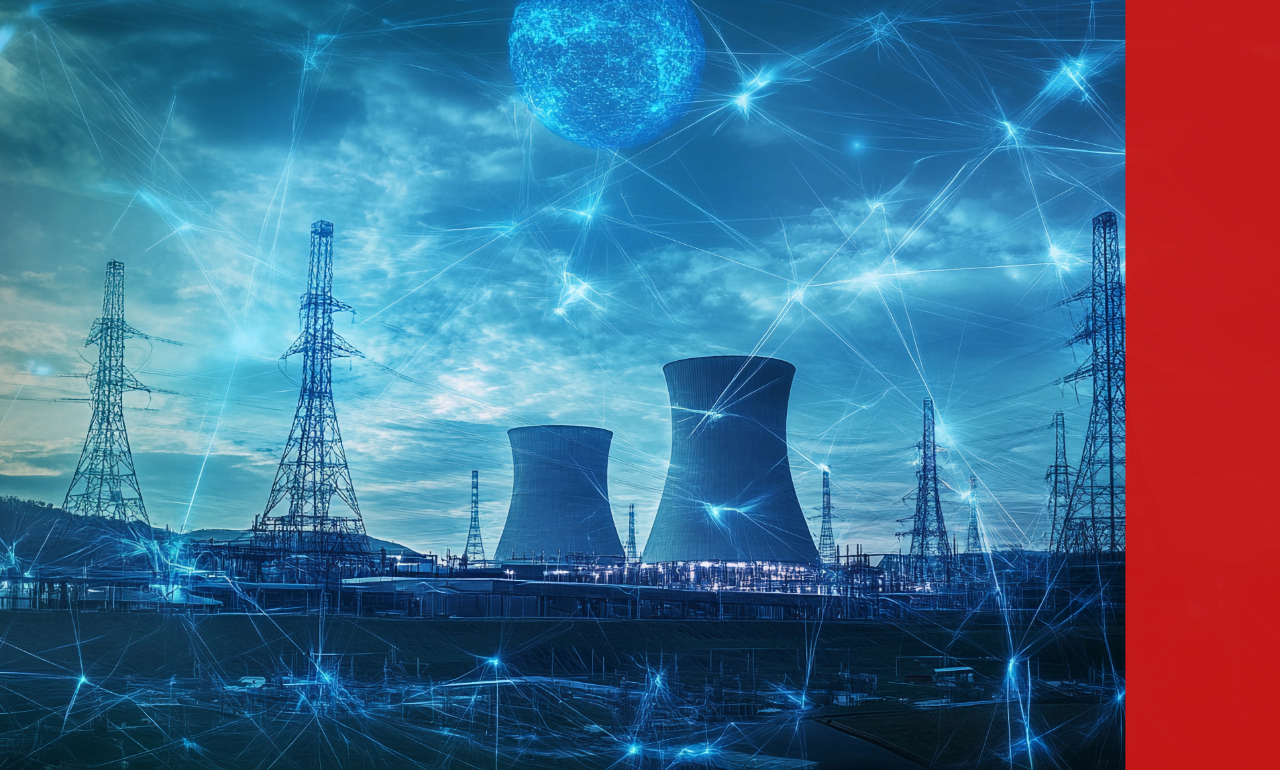
Meta is making a major bet on nuclear energy as a long-duration solution for powering AI-scale data centers, signing a package of agreements that could support up to 6.6 gigawatts (GW) of nuclear capacity by 2035. The mix is notable: part of the supply comes from existing reactors and uprates that can begin sooner, while the rest depends on new advanced reactor projects that will take years to permit and build.
Quick takeaways
- Near-term impact is “grid + electrical infrastructure,” not just generation. The earliest contracted nuclear deliveries begin late 2026, meaning the front edge of spend and supply-chain pull shows up first in switchgear, protection, power conversion, and control systems.
- Meta is using long-term contracts to de-risk nuclear assets supporting both extended operation at existing plants and early commercialization of advanced reactors.
- The long-horizon projects carry execution risk. Advanced reactors bring permitting, supply-chain, and construction uncertainty important for anyone forecasting 2030–2035 capacity.
Meta said its new agreements with Vistra, Oklo, and TerraPower are intended to support nuclear power supply for data centers linked in public reporting to Meta’s AI-driven “Prometheus” data center project in New Albany, Ohio, described as a 1-gigawatt facility expected to come online in 2026.
Meta and its partners did not disclose full commercial terms publicly, but the announcements outline capacity, timing, and project structure enough to show how hyperscalers are trying to “lock in” firm, 24/7 power as AI demand ramps.
Deal-by-deal: where the 6.6 GW comes from
1) Vistra: 20-year PPAs tied to operating reactors and uprates (PJM region)
Vistra says it signed 20-year power purchase agreements (PPAs) to provide 2,609 MW of “zero-carbon energy” to support Meta’s regional operations. The package includes 2,176 MW from operating generation (Perry and Davis-Besse in Ohio) plus 433 MW of planned uprates across Perry (OH), Davis-Besse (OH), and Beaver Valley (PA).
Key timeline detail: Vistra says Meta’s purchases begin late 2026, with additional capacity coming online through 2034 as uprates are completed. Vistra also emphasizes the electricity continues to flow “to the grid for all electricity users,” reflecting a grid-supplied structure rather than a physically dedicated feed to one facility.
2) Oklo: a planned 1.2 GW “power campus” in southern Ohio (new build)
Oklo says it has an agreement with Meta that advances Oklo’s plan to develop a 1.2 GW power campus in Pike County, Ohio, to support Meta’s data centers in the region. The release also states the deal includes a mechanism for Meta to prepay for power and provide funding, which Oklo says it will use to help secure fuel and advance early project phases.
Oklo’s materials describe a development path starting in 2026 (site work) and targeting first operations around 2030, with scale-up thereafter—though, as with any new nuclear build, the schedule depends on licensing, supply chain readiness, and construction execution.
3) TerraPower: up to 8 Natrium advanced reactors with built-in storage (new build)
TerraPower says its agreement with Meta covers development of up to eight Natrium reactor + energy storage system plants in the U.S. TerraPower states this could provide Meta up to 2.8 GW of carbon-free baseload energy and, using its built-in storage, the system could “boost” total output to 4 GW. TerraPower also says initial units could come online as early as 2032.
How this fits Meta’s broader nuclear strategy
These January 2026 agreements build on Meta’s earlier nuclear moves:
- In December 2024, Meta announced it would pursue an RFP process targeting 1–4 GW of new nuclear capacity in the U.S., with deliveries starting in the early 2030s.
- In June 2025, Constellation and Meta announced a 20-year PPA for the output of the Clinton Clean Energy Center (Illinois) 1,121 MW of emissions-free nuclear energy—framed as supporting Meta’s clean energy goals and operations in the region.
Why this matters for day-to-day procurement planning
Even if your organization is not building hyperscale data centers, the knock-on effect of AI electrification shows up in categories you already buy:
- Power distribution & protection: breakers, relays, fuses, contactors, surge protection
- Power semiconductors: SiC/IGBT modules, rectifiers, gate drivers, high-voltage components
- Controls & sensing: monitoring, industrial control, isolation, power metering
- Interconnect: high-current connectors, cable assemblies, rugged power connectors
- Thermal & reliability: cooling subsystems, materials, qualification-driven alternates
Hyperscalers are trying to reduce uncertainty by contracting long-duration power now while utilities and suppliers are still working through interconnect queues and build timelines. The result is a broader infrastructure buildout wave that can tighten availability and extend lead times across electrical and industrial electronics categories, especially during surge periods.


